Keflavík Airport
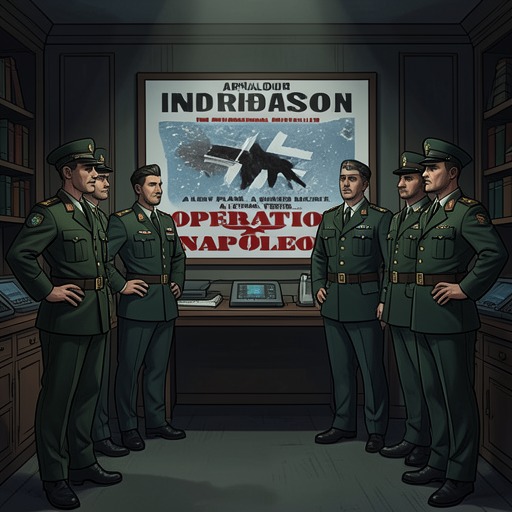
Operation NapoleonKeflavík Airport is the point where a secret U.S. military expedition enters Iceland and where its plan to remove a German aircraft wreck from Vatnajökull Glacier is prepared. On 28 January 2000, a C-17 transport plane lands after dark with the machinery and personnel needed for the glacier operation; from the airport, unmarked trucks blend into civilian traffic and head south. The same location is later named as the departure point for taking the wreck and its contents to Roswell, tying the airport to both the operation’s physical logistics and its intended cover-up.
Setting and military role
The airport’s military setting is a runway reserved for the North Atlantic Treaty Organization base on Midnesheidi moor. The location lies among lava fields at the western tip of the Reykjanes Peninsula, in a remote, bleak landscape exposed to gale-force winds. The base has hangars, barracks, shops, a cinema, and administrative buildings. Once a centre for reconnaissance flights during the Cold War, its activity had since been greatly curtailed.
That reduced profile provides the backdrop for the arrival. The C-17 lands at around eight in the evening and taxis to the end of runway seven. The winter temperature is several degrees below zero, with rising temperatures and snow in the forecast. The setting is both an active military installation and an isolated transit point from which a large operation can begin without immediately drawing public attention.
Arrival and concealed departure
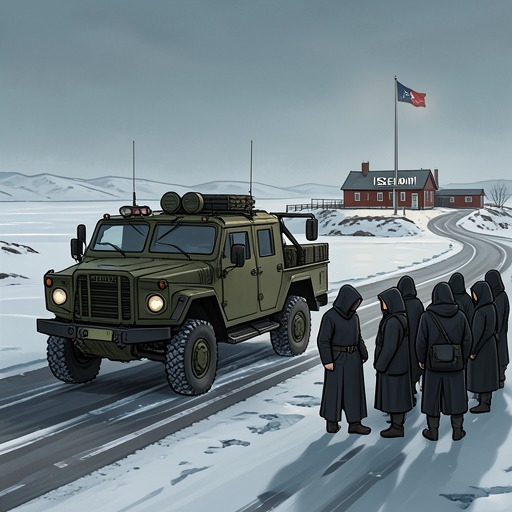
When the plane stops, its aft door opens and personnel unload powerful snowmobiles, tracked vehicles, skiing equipment, and other gear for the glacier. Within fifteen minutes of landing, the first transporter leaves for the Reykjanes highway and the route south toward Vatnajökull Glacier. The equipment’s destination is remote, but the airport is where the expedition becomes a movement of men and machines across Iceland.
Four trucks of different models wait beside the C-17. One is a German-made Mercedes-Benz with only Icelandic licence plates, indistinguishable from the ordinary truck-and-trailer combinations on the country’s roads. The vehicles leave at half-hour intervals and merge with civilian traffic. This staggered departure makes the airport not merely a landing site but the first stage of the operation’s disguise: conspicuous military cargo is converted into apparently routine road transport.
Ratoff, the operation’s director, travels in the final vehicle. The admiral commanding the base has been warned of his arrival and ordered to provide transport without asking questions. Although curious, the admiral does not press him. The equipment reminds him of rumours about the commotion of the late 1960s, and he recognizes the possibility that another glacier expedition is beginning. His recollection connects the present deployment to an earlier, still-obscure episode without explaining its full history.
Planned removal and concealment
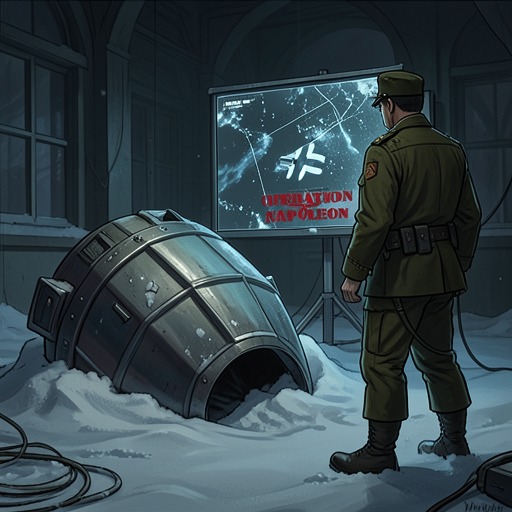
Keflavík Airport remains central to the operation even after the expedition has gone inland. Vytautas Carr tells a U.S. secretary that the C-17 is intended to carry the aircraft wreck, other debris, bodies, and any remaining contents from the glacier back to the United States. He identifies Keflavík as the departure point and Roswell as the destination, describing the aircraft’s intended disappearance there as permanent. The plan makes the airport a prospective exit route for evidence as well as the entry point for the recovery force.
The secret being transported is politically explosive. Carr explains that the gold associated with the plane originated in concentration camps; the secretary recognizes it as plundered Jewish gold. At Keflavík, however, the operation is presented to the transport pilots as the recovery of a harmless German aircraft from the Second World War. Ratoff denies that the plane contains a bomb and says he has heard nothing of a Nazi bomb, even as the wider crisis includes an official warning that an old German bomb lies on the glacier. The airport thus stands at the junction of competing accounts: the concealed cargo and its history, the public-facing military explanation, and the danger invoked to influence Icelandic officials.
Narrative significance
The airport’s importance comes from the contrast between its visible ordinariness and the extraordinary movement it enables. Personnel and specialized equipment arrive at a base whose activity has diminished; trucks bearing familiar plates then disappear into civilian traffic. Later, the same runway is designated for an extraction meant to remove the aircraft and its contents from Iceland. Keflavík is therefore the operation’s threshold in both directions: the place where a secret is brought into the country and the planned route by which it will be taken away.